Showing posts with label fellowship. Show all posts

1 John 1-2 Fellowship with God and Man

TMS 2 Corinthians 9:6-7 Reaping What You Sow
2 Corinthians 9:6 “But this I say:
he who sows sparingly will also reap sparingly,
and he who sows bountifully will also reap bountifully.
7 So let each one give
as he purposes in his heart,
not grudgingly or of necessity;
for God loves a cheerful giver.

8 And God is able to make all grace abound toward you, that you, always having all sufficiency in all things, may have an abundance for every good work.”

Observations: 9:6-7 God doesn't need our money, but we need to give. God actually provides us with the means of giving, and we are just being stewards of His stuff when we give. So we want to determine what He wants us to do with His stuff. God wants us to give of our own free will (as He wants us to live all our lives), choosing to do what pleases Him, and benefits us. So we should determine God's will for our giving, and then give, knowing we will benefit in return. We can't out-give God, and He is totally just in recompensing those who honor Him. See the context in 2 Corinthians 9 for a better understanding of giving, and the series of being faithful with God's treasure at the end of the TOYL book on Truthbase.net.
Application: Know that God gives you what you need, and will give you back more than you give or willingly “sacrifice.” (see Malachi 3:10 comments).
Prayer: Heavenly Father, thanks that You have so graciously given of Yourself in providing my salvation in Christ, and in meeting all my needs; may I mirror Your grace and generosity in my giving. Amen.


1 John 1-2 The first epistle of John is considered the most difficult to outline in the New Testament, but it is fairly easy to understand and apply the individual verses without a thorough knowledge of the literary structure (like Proverbs). One commentator declared that the book made as much sense reading each sentence beginning at the last verse of chapter 5, as it did beginning in 1:1. However, there are discernible blocks of text (lots of structure in triads, etc,) and a logic flow, but the argument isn't as smooth due to our insufficient understanding, not John's writing. The apostle John writes to born-again believers so they may have fellowship with God and each other, and continue to abide in Christ (John 15)  so they can reap the abundant life God offers. The epistle addresses a number of errors and false teaching that could keep believers from being blessed. Just like in the end of his gospel, John reveals his purpose in writing at the end.

1 John 5:11 And this is the testimony: that God has given us eternal life, and this life is in His Son. 12 He who has the Son has life; he who does not have the Son of God does not have life. 13 These things I have written to you who believe in the name of the Son of God, that you may know that you have eternal life, and that you may continue to believe in the name of the Son of God.


1 John 1 Fellowship with God and Man
1:1 That which was from the beginning,
that which we have heard,
that which we have seen with our eyes,
that which we saw,
and our hands touched,
concerning the Word of life

2 and the life was revealed,
and we have seen,
and bear witness,
and declare to you
that eternal life,
which was with the Father,
and was revealed to us;
3 that which we have seen and heard
we declare to you,

that you also may have fellowship with us.
Yes, and our fellowship is with the Father,
and with His Son, Jesus Christ.
4 And we write these things to you, that our joy may be fulfilled.

5 This is the message which we have heard from Him and announce to you,
that God is light, and in Him is no darkness at all.

6 If we say that we have fellowship with Him
and walk in the darkness,
we lie, and don’t tell the truth.

7 But if we walk in the light, as He is in the light,
we have fellowship with one another,
and the blood of Jesus Christ, his Son,
cleanses us from all sin.

8 If we say that we have no sin,
we deceive ourselves,
and the truth is not in us.

9 If we confess our sins,
He is faithful
and just
to forgive us the sins,
and to cleanse us from all unrighteousness.

10 If we say that we haven’t sinned,
we make Him a liar,
and His word is not in us.

Observations: 1:1-4 John opens the epistle with words very similar to the prologue of his gospel: “in the beginning,” “the word”, and “life.” He testifies to Jesus (the word of life) so that the born-again readers may have fellowship/participation with the apostles in the life of God, so that their mutual joy might be full (because his children walk in the truth - 3 John 1:4). It might be worth making sure you understand what fellowship is: its root is “to have in common” and by extension “to share” or “participate in.” We share or participate in the life of Christ, both as the animating force of our spiritual existence, and the rule or practice of our lives. If Christ is not living in and through us, we won't have Biblical fellowship with each other. Unity is achieved, not by compromise, but by all parties moving to the truth.
1:5-7 Since God is light (another concept from John's prologue), and in Him is no darkness, then those who share His life (fellowship) can't walk in darkness, but must walk in the light (not live in sin). This general principle is stated in verse 5, and then elaborated in verses 6-10. Those who say they have fellowship with God, yet are sinning, are liars. But those who walk in the light, not only do have fellowship with God, but also have fellowship (as shared life) with other believers. This is not about sinless perfection, but about being forgiven through the sacrifice of Christ so that one can be cleansed from sin (see comments on Heb 9:14, where the blood of Christ cleanses our conscience from dead works so we can serve the living God).
1:8-10 Those who say they have no sin are deceived (psychologists say we're blind to most of our faults), and the truth is not in them. However, the corrective to sin, the Christian bar of soap, is to “name it and claim it.” Name the sin, and claim forgiveness. “Confess” means to “say the same thing” as God does about our behavior, that it is wrong, and leads to death. Acknowledging what is wrong is tantamount to forsaking it, for why would someone want to continue in what is wrong and deadly? Confession opens the door to cleansing. If we confess, God is faithful and just. The structure is chiastic, with God's justice being the basis of our forgiveness (Christ paid the penalty so we don't have to -Rom 3:23-26), and His faithfulness to His promises is the basis of our cleansing (1:7), so we can walk in the light of His truth. This is not justification, but the sanctification or holiness necessary for living in unity with a holy God (see comments on Mt 6:15).
Verse 10 essentially restates verse 8, forming an inclusio; those who would deny their sin are not only liars, but make God a liar as well. Such folks don't have the light of the truth in them, and are not in fellowship with God.
Application: God wants us to walk in the light so we can share His life; if we find ourselves slipping into the dark, use 1 John 1:9 to get back into the light.
Prayer: God, I praise You for wanting to share Your life with me; may I walk in the light and enjoy fellowship with You and my fellow forgiven believers. Amen.


1 John 2 Confidence at His Appearing
2:1 My little children, I write these things to you so that you may not sin.
If anyone sins, we have a Counselor with the Father, Jesus Christ, the righteous.
2 And He is the atoning sacrifice for our sins,
and not for ours only, but also for the whole world.

3 This is how we know that we know Him:
if we keep His commandments.
4 One who says, "I know Him,"
and doesn’t keep His commandments,
is a liar,
and the truth isn’t in him.

5 But whoever keeps His word,
the love of God has most certainly been perfected in him.

This is how we know that we are in Him:
6 he who says he abides in Him
ought himself also to walk just like He walked.

7 Brothers, I write no new commandment to you,
but an old commandment
which you had from the beginning.
The old commandment is the word which you heard
from the beginning.

8 Again, I write a new commandment to you,
which is true in Him and in you;
because the darkness is passing away,
and the true light already shines.

9 He who says he is in the light
and hates his brother,
is in the darkness even until now.

10 He who loves his brother abides in the light,
and there is no occasion for stumbling in him.
11 But he who hates his brother
is in the darkness,
and walks in the darkness,
and doesn’t know where he is going,
because the darkness has blinded his eyes.

12 I write to you, little children,
because your sins are forgiven you for His name’s sake.
13 I write to you, fathers,
because you know Him who is from the beginning.
I write to you, young men,
because you have overcome the evil one.

I write to you, little children,
because you know the Father.
14 I have written to you, fathers,
because you know Him who is from the beginning.
I have written to you, young men,
because you are strong,
and the word of God abides in you,
and you have overcome the evil one.

15 Don’t love the world,
neither the things that are in the world.
If anyone loves the world,
the Father’s love isn’t in him.

16 For all that is in the world,
the lust of the flesh,
the lust of the eyes,
and the pride of life,
isn’t the Father’s,
but is the world’s.
17 The world is passing away with its lusts,
but he who does God’s will abides forever.

18 Little children, these are the end times,
and as you heard that the Antichrist is coming,
even now many antichrists have arisen.
By this we know that it is the final hour.
19 They went out from us,
but they weren't of (ek) us;
for if they were of us,
they would have continued with us.
But they left, that they might be revealed that none of them were of us.

20 You have an anointing from the Holy One, and you all have knowledge.

21 I have not written to you because you don’t know the truth,
but because you know it,
and because no lie is of the truth.
22 Who is the liar but he who denies that Jesus is the Christ?

This is the Antichrist, he who denies the Father and the Son.
23 Whoever denies the Son,
the same doesn’t have the Father.
He who confesses the Son has the Father also.

24 Therefore, as for you,
let that abide in you
which you heard from the beginning.
If that which you heard from the beginning
abides in you,
you also will abide
in the Son,
and in the Father.
25 This is the promise which He promised us, the eternal life.

26 These things I have written to you concerning those who would lead you astray.
27 As for you, the anointing which you received from Him abides in you,
and you don’t need for anyone to teach you.
But as His anointing teaches you concerning all things,
and is true, and is no lie,
and even as it taught you, you will abide in Him.

28 Now, little children, abide in Him,
that when He appears,
we may have confidence, and not be ashamed before Him at his coming.
29 If you know that He is righteous,
you know that everyone who practices righteousness
is born of Him.

Observations: 2:1-2 John said in chapter 1 that he wants his readers to walk in the light and not sin. He reiterates that intent, and adds that if we do sin, we have an Advocate or Counselor with the Father, Jesus the Messiah, the Righteous. He is the atoning/covering sacrifice for our sins. But wait, there's more! Jesus died for the whole world (John 3:16) so He is the sacrifice for all people who put their faith in Him.
2:3-4 John gives a number of benchmarks throughout the book, so we don't deceive ourselves into believing what isn't true. We can have confidence that we know God if we keep His commandments. As Jesus said: “If you love me, obey me” and “Why do you call me Lord and don't do what I say?” (John 14:15; Luke 6:46). So if we are intimately acquainted with God, we will be keeping His commands. Those who don't obey are lying when they say they have a good relationship with God. The truth isn't abiding in them and there will be no fruit either (John 15).
2:5-11 Those who keep (abide in) God's word, have the love of/for God (objective genitive) brought to completion in living loyally for Him. This is how a believer knows they are living “in union with Him” (a major concept in the epistle); they who abide in Him, walk/live, as Jesus did, particularly in relationships with other believers that reflect self-sacrificial love (agape). This is in accord with the summation of the law (love - Galatians 5:14), the old command which Jesus spoke in the Sermon on the Mount (Matthew 5:43), and the “new” major command Jesus gave his disciples at the Last Supper (John 13:34-45), expressing the higher standard to love self-sacrificially as Jesus loved them. The basis of the command is that the old dark order was passing away, and the new true light (of God's requirements) was already shining, for them to walk by. The one who hates his brother/sister is walking in the dark. The one who loves, abides in the light. One could argue that the old commandment was to believe and follow Christ (cf 3:23) but that command doesn't match the parallelism, nor the emphasis on loving others in the epistle. . 
2:12-15 It would have been the better division of the chapters, to begin chapter 2 here, since the earlier section relates to the theme of fellowship with God and others by walking in the light, and now John turns his attention to overcoming satanic obstacles to fellowship with God. There is a stylistic change of “I am writing to you” and the naming of three groups, possibly related to stages of spiritual development (young believers, mature believers, and those in the middle).
In verse 12 he writes to the “little children” whose sins are forgiven for the sake of God's glory or name. In verse 13 John addresses the same group, who have progressed from being forgiven to knowing God.
John writes to the “fathers” who have had a mature relationship with God, from the beginning, and are abiding in it, so the same content in is both verses.
John writes to the “young men” who initially have overcome the evil one, and then progressed to maintaining their strength by having the word of God abide in them (an ongoing necessity for fellowship -John 15).
2:15-16 Next John addresses their desires and values, which could trip them up. Unsanctified desires, derived from Satan's world, are the major reason believers continue to sin, and don't live in victory. See comments on Eve's temptation Genesis 3 and Jesus' temptation in Matthew 3. The desire for temporal power (pride-security/significance), pleasure (flesh), and possessions (eyes) motivate us to seek those things in the world, rather than the delights of the Father. The world, with its temporal trinkets will pass away, but the one who does God's will (which is knowable and doable) will abide forever. See series on Deadly Desires on Truthbase.net.
2:18-19 John warns them of the chief agent of Satan, the Antichrist, and the lesser minions, the false teachers who would seek to dissuade them from following Christ in the light. These false teachers went out from the the apostles, but they were not of (literally “ek” denoting source or origin, as in sharing the same source of teaching and doctrine) them. If the false teachers were from the apostles, they would have continued in the apostolic teaching. Their departure from the apostolic doctrine proved they were not based in them, and thus should be ignored. This indicates that the problem facing the readers is the same as that of the rest of the NT, Judaizers, who were denying the validity of the believer's experience in Jesus the Messiah, and teaching the OT as the basis of righteousness, rather than the words of Jesus. In fact they would go on to deny that Jesus was the Messiah (same word as Christ) of the OT, come in the flesh. Those who posit some sort of Gnostic teaching are ignorant of the fact that Gnosticism didn't become a coherent philosophy until the second century after Christ.
2:20-23 John reminds his readers that they have an “anointing” from the Holy One, so they have the correct knowledge, and don't need the Judaizing teaching. Apparently they still need John's instruction, and were in danger of being led astray, so they didn't know everything. The fact that they had an “anointing,” a reference to the Holy Spirit which the Messiah was to give, validated the Messiahship of Christ, and their accurate/true belief in Him. That was all they needed, not the false teaching of the antichrists. John isn't writing because they don't know the truth, but because they do know it (and don't need anything additional). No lie comes out of the truth; the liar is the one who denies that Jesus is the Messiah. Note they are not denying what He did, but that He is the promised Messiah of Isaiah 40-66 fame (as well as other places in Isaiah and the rest of the OT).
Satan is the one who denies the Father (as he did in Isaiah 14) and the Son (as he was doing through his agents, the false teachers. Whoever denies the Messiahship of the Son, doesn't have the Father either (so don't pay attention to them). Whoever confesses/acknowledges the Son (as the believers did) have the Father also (and don't need anything else).
2:24-27 Therefore (conclusion of the above), the believers should abide/remain in the teaching they heard from the real apostles, and have it abide in them (John 15). If they abide/remain in the truth, they will abide in the Son and Father, and have the fellowship John promised in the beginning of the epistle, and the eternal life Jesus promised in the gospels (cf John 3:16, 36). So the recipients of the letter don't need anyone to teach them anything else. The anointing they received (the fact of receiving the Holy Spirit) teaches them all they need to know to ignore the false teaching. This is not a blanket statement to all believers that they don't need teaching, but is context specific to the audience, with regard to the error of the antichrists. Jesus gave the responsibility to teach people to obey (Mt 28:20); Paul instructed Timothy to teach people who could teach others also (2 Timothy 2:2); the Holy Spirit gave gifted men to teach (Ephesians 4); and the gift of teaching to the early church (1 Corinthians 12). The author of Hebrews outlined the Christian career path of progressing to be able to teach others (Heb 5), so obviously believers need teaching, just not the false teaching of the antichrists (those opposed to Christ as Messiah, and probably advocated Judaism as the means to getting blessed). John closes the chapter, and opens the next one with the instruction to abide in what they had been taught, so they would abide in union with Christ.
2:28-29 John exhorts the believers to abide/remain in union with Christ so that when He appears to judge and set up His Millennial Kingdom, they would have confidence to stand before His judgment seat (2 Corinthians 5:9-10). Those who were not loyal to Him, or who spent their time stumbling around in the dark, would be ashamed at His coming.
Knowing that Jesus is righteous (and requires righteousness for blessing) they know that everyone who is born of Him would also have/practice righteousness.
Application: If we abide in the truth and aren't deceived by the world or false teachers, we will live in love and righteousness, and thus have confidence to stand before the Messiah when He returns.
Prayer: Lord Jesus, I pray You would guide me in understanding and applying Your truth, so I will abide in You,and will not be ashamed to stand before You when You return. Amen.


Digging Deeper

God in a nutshell: God wants us to share in His life, and have proper relationships with others. He provides the means of doing that with His truth (light), and forgiveness, and wants to cleanse us from all our sin.

Build-a-Jesus: Jesus is the word of life and the coming Messiah, regardless of what anyone says. One day all will stand before Him and acknowledge that truth, even the Antichrist.

Us in a nutshell: We need to walk in the light and love each other if we are to share in the life of Christ.

Where to Go for More:

2 Corinthians 4-5 Gaining Your Glory-Suit

2 Corinthians 4-5 Gaining Your Glory-Suit


Psalm 140:1-13 Just Protection
Ps 140:1 Of David “Deliver me, Yahweh, from the evil man. Preserve me from the violent man; 2 those who devise mischief in their hearts. They continually gather themselves together for war. 3 They have sharpened their tongues like a serpent. Viper’s poison is under their lips. Selah. 4 Yahweh, keep me from the hands of the wicked. Preserve me from the violent men who have determined to trip my feet. 5 The proud have hidden a snare for me, they have spread the cords of a net by the path. They have set traps for me. Selah. 6 I said to Yahweh, "You are my God." Listen to the cry of my petitions, Yahweh. 7 Yahweh, the Lord, the strength of my salvation, you have covered/protected my head in the day of battle.
8 Yahweh, don’t grant the desires of the wicked. Don’t let their evil plans succeed, or they will become proud. Selah. 9 As for the head of those who surround me, let the mischief of their own lips cover them. 10 Let burning coals fall on them. Let them be thrown into the fire, into miry pits, from where they never rise. 11 An evil speaker won’t be established in the earth. Evil will hunt the violent man to overthrow him. 12 I know that Yahweh will maintain the cause of the afflicted, and justice for the needy. 13 Surely the righteous will give thanks to your name. The upright will dwell in your presence."

Observations: 140:1-13 In this imprecatory psalm David seeks deliverance from the proud, evil enemies who attack him verbally and conspire against him physically. He expresses faith in God's protection of him, even though God has let him be in the situation. He calls down nasty judgment upon them, which they completely deserve. David knows that since God is just, He will maintain his cause and turn the tables on the bad guys. David expresses confidence that he will be delivered by noting that the righteous will give thanks to His name (manifestation of His character in answering their prayer), and that the upright (the righteous who pass the test of the storm -Ps 11) will dwell in His presence. By stating this, he is asserting his own righteousness and uprightness.

Application: Even when unjustly under attack, maintain your righteousness and uprightness, for that is the basis of trusting God to justly deliver you.

Prayer: God, may I never be swayed (by the proud and evil folks who seek to make me stumble) from my trust in You and pursuit of living out Your truth; I praise You for protecting me, even in the midst of the battles I face. Amen.


TMS Hebrews 10:24-25 Biblical Fellowship
Hebrews 10:24 And let us consider one another
in order to stir up love and good works,
25 not forsaking the assembling of ourselves together,
as is the manner of some,
but exhorting one another,
and so much the more as you see the Day approaching.
26 For if we sin willfully after we have received the knowledge of the truth, there no longer remains a sacrifice for sins, 27 but a certain fearful expectation of judgment, and fiery indignation which will devour the adversaries.”

Observations: 10:24-25 This passage in the hinge of Hebrews, indicating what we should do in light of all that God has done for us (see comments in Hebrews 10). The answer is simple to know, a little more difficult to do: progress in Faith, Hope, and Love. Each virtue is elaborated on a little bit in chapter ten, but then chapter 11 is about Faith, chapter 12, about Hope, and chapter 13 opens with “Let brotherly Love continue.” In our passage above, the author gives a synopsis of how believers should live in love toward each other, especially as it relates to gathering in fellowship. Remember that fellowship means to have in common, which starts with our being born again into the family of God.
Believers should gather to provoke or stimulate (the word was used on inciting a riot) each other to love and good deeds (blessable behavior). There is no such thing as a lone wolf in the Body of Christ. God expects us not only to gather, but to gather to give to others. That means we need to get from Him first. Assembling a bunch of carnal Christians to seek worth and value from each other is not what God had in mind. The opposite is for like-minded saints to gather and enrich each other, so they will do well at the judgment seat. "All the more as you see the day approaching." This life is the only chance we get, use it wisely.
See the sixth of the 7 PASSAGES for how believers should interact with each other. See the Catacomb Church Blog for how believers should assemble so they interact Biblically.
10:26-27 The importance of Biblical fellowship in light of the coming judgment is underscored by the warning which follows. The temptation for the original audience was to forsake Christianity to go back to Judaism, abandoning the sacrifice (Jesus) which was acceptable to God. All that remained in Judaism for them (see the “Warning Passages" in Hebrews) was judgment, not reward. The temptation for us is to go back to the way we were, the dead works that will be burned up in judgment when Christ returns. Biblical fellowship provides the protection for toddler Christians (so they don't wander off into self-destructive behavior), until they can develop the spiritual maturity to stay on the path and help others do the same.

Application: If you are a young believer, seek out fellow believers who are seeking the Lord according to the truth, and stick with them. If you're a more mature believer, start considering how your interaction with other believers spurs them on to self-sacrificial love and glory getting good deeds.

Prayer: Heavenly Father, thanks for the fellowship of believers who seek to love You with all they've got, and love each other as themselves; may I always seek Your purposes for my life and for the lives of others. Amen.


2 Corinthians 4-5 Just like Romans 3 was crucial for understanding justification, and Romans 6 for sanctification, chapters 4-5 are probably the most significant for understanding glorification. Spend whatever time it takes to master them. Come back later to study this (see Week in Review) if you don't fully grasp the light, otherwise you'll continue in the dark. It might help to read both chapters four and five, (of 2 Corinthians, below), before you start reading the observations. While you're at it, throw in chapter 3 to refresh your memory. The section under Digging Deeper goes back to Genesis and develops the theme of restoration to glory that Paul talks about in these chapters. Don't miss it.

2 Corinthians 4 Focus on the Weight of Glory
4:1 "Therefore seeing we have this ministry, even as we obtained mercy, we don’t faint. 2 But we have renounced the hidden things of shame, not walking in craftiness, nor handling the word of God deceitfully; but by the manifestation of the truth, commending ourselves to every man’s conscience in the sight of God. 3 Even if our Good News is hidden/veiled, it has been hidden/veiled among/en those who are perishing; 4 among whom the god of this world has blinded the minds of the unbelieving, that the light of the Good News of the glory of Christ, who is the image of God, should not dawn on them. 5 For we don’t preach ourselves, but Christ Jesus as Lord, and ourselves as your servants for Jesus’ sake; 6 seeing it is God who said, "Light will shine out of darkness," who has shone in our hearts, to give the light of the knowledge of the glory of God in the face of Jesus Christ. 7 But we have this treasure in clay vessels, that the exceeding greatness of the power may be of God, and not from ourselves.
8 We are pressed on every side, yet not crushed; perplexed, yet not to despair; 9 pursued, yet not forsaken; struck down, yet not destroyed; 10 always carrying in the body the putting to death of the Lord Jesus, that the life of Jesus may also be revealed in our body. 11 For we who live are always delivered to death for Jesussake, that the life also of Jesus may be revealed in our mortal flesh. 12 So then death works in us, but life in you.
13 But having the same spirit of faith, according to that which is written, "I believed, and therefore I spoke." We also believe, and therefore also we speak; 14 knowing that He who raised the Lord Jesus will raise us also with Jesus, and will present us with you. 15 For all things are for your sakes, that the grace, being multiplied through the many, may cause the thanksgiving to abound to the glory of God. 16 Therefore we don’t faint, but though our outward man is decaying, yet our inward man is renewed day by day. 17 For our light affliction, which is for the moment, works for us more and more exceedingly an eternal weight of glory; 18 while we don’t look at the things which are seen, but at the things which are not seen. For the things which are seen are temporal, but the things which are not seen are eternal."

Observations: 4:1-2 The ministry to which Paul refers is that described in the previous chapter, that of ministering the truth of the New Covenant, with its Holy Spirit, life changing power, which transforms believers into the image of Christ, with resultant glory (see last post). Paul manifests (only used elsewhere in 1 Corinthians 12:7 of the obvious manifestation of the gifts of the Holy Spirit in their lives) the truth, by causing it to be written on people's hearts, with resultant life change (“living epistles” in 3:3 make sure you understand that), which causes Paul's ministry to be approved or commended by the recipients conscience (awareness of what is good or bad), as they are blessed by it (“Hey, this stuff works, try it!”). Paul does so in full consciousness that he serves in the sight of God (doing what is right in His sight – see 5:9-10).
4:3-7 The good news or gospel that Paul was preaching “is having been hidden” in/among those who are perishing. This is a periphrastic perfect (like Ephesians 2:8) using a present and a perfect verb to emphasize the present continuing results of something that happened in the past. See chapter 3 (last post) and Acts 28:27 for the callousness to truth that results in the “veiling.” Note that the perfect indicates an event in the past, not a state in which one was born. It's something that occurred as a specific event in one's history. This should be earth (or at least theology) shattering for some. Those who reject truth, wind up being insensitive to it, so that even if it is proclaimed and authenticated with miracles, they won't see it. Those are the ones who are perishing (headed to judgment and destruction), which in the context is loss of reward/glorification, not lack of justification. Note the passage is about glory.
The god of this world, Satan (who grasped at the glory of God and missed it) has blinded (aorist tense, giving a snapshot of usually past action) the minds (to which he has access) of the unbelieving (those who aren't believing Paul's message), lest the light of the gospel of the glory (it's about the glory, not forgiveness) of the Messiah, the image of God (the promised ruler of the world to come) should not dawn on them (so they won't get the glory).
This is the message Paul preaches about Jesus the Messiah, as Lord, and why he views himself as a servant of Jesus for the benefit of the Corinthians (who are already justified).
The God of creation began this world with “Let there be light” (Genesis 1:3), a localized manifestation of the glory/energy of God, that eventually took shape as our material world (temporarily, the end is coming). God commanded the light to shine out of darkness and also to shine in our hearts. This is a reference to the Holy Spirit (see verse 7) being given to believers (Ephesians 1:17-18), so that they might know the hope (of glory - Ephesians 1:18; 4:1) that accompanies their belief/calling. This shining gives the light (here Paul's being clever again with multiple shades of meanings being given to the same concept in the same passages), which in this instance is the Spirit giving the knowledge of the glory of God, because they've already received the first down-payment (2 Corinthians 1:22). Since they've received the first-installment they know that it exists and is possible, and for them. This is the glory God has promised to those faithful to the Messiah, which is experienced in the face/presence of Christ, the Messiah (cf 2 Corinthians 3:18). But they have this treasure (of a measure of the Spirit shining in them like a firefly flying around in a jar) in an earthen vessel, so that God's power/glory might be seen rather than theirs. As they depend on Him, his power will shine through them as He strengthens and protects, but there is a different shining that Paul has in mind, as elaborated in the next section.
4:8-12  As an common earthen vessel, Paul, and those serving with him, experience difficulties because of their service of Christ in Satan's world, filled with his agents. Paul said in 1 Corinthians 15:31 that “I die daily.” In verse 10 Paul uses dying (nekrosis) rather than death (thanatos) to make the point that he is constantly dying to self (same verb in Colossians 3:5 -mortify) which is sourced in his relationship with Christ, not proclaiming the death (thanatos) of Christ. He dies daily to do the Father's will, as Christ did, so the the life of Christ might be revealed in his body. This is the use of a subjunctive aorist to give a snapshot of a future event. Verse 11 just elaborates what he described in verse 10. Those who live for Jesus will die daily (Luke 9:23-26 “take cross and follow me to glory”), so the life/dominion/glory of Christ will be manifest, revealed, in the mortal flesh (as it is swallowed up by life 5:4). Verse 12 means that as Paul ministers for the benefit of the Corinthian believers, death is at work in him, so that life might be at work in them.
4:13-19 Because Paul believes what God has revealed, he speaks the truth (risking death), knowing that if he dies, God will raise him up (and give him glory) just like He did with Christ. That glorification will occur with those who respond to the truth. Paul ministers by the grace of God so that the Corinthians will receive it and multiply it so there will be much thanksgiving, which reveals God at work, and thus His glory. Therefore, Paul doesn't lose heart. Though outwardly he experiences the wear and tear of opposition, his inner self (man is added) is being renewed (only used in Colossians 3:10) daily. At first glance this looks like something that happens in the here and now, but the next verse makes it clear that it is future glory. Verse 17 makes it obvious that Paul is talking about his glory in the kingdom (as does the next chapter). He views the daily dying as a lightweight annoyance, which produces (works out) a far greater and more abundant glory, that he describes as eternal (vs temporal affliction), and weighty (vs lightweight affliction). Suffering to do the will of God is meritorious and earns a reward (a future bestowal of grace -1 Peter 1). Those who've never studied grace should, to see how the Bible uses it in past/justification, present/sanctification, and future/glorification aspects. Fortunately there is a Survey of Grace on Truthbase.net, which does that for you, but study it yourself and develop your own convictions.
So Paul focuses not on what is seen, the temporal afflictions, but on what is not seen, the eternal glory with which he will be clothed, if he endures (see next chapter) when Christ returns.

Application: Outward suffering for the right reasons produces a weight of glory that makes it all worth while, so don't look at the pain, look at the gain.

Prayer: Lord Jesus, thanks for Your model of suffering righteously for doing the will of the Father; may I deny myself to follow You, and share in Your glory as You've promised. Amen.

2 Corinthians 5 Getting Your Glory-Suit
5:1 "For we know that if the earthly house of our tent is dissolved, we have a building from God, a house not made with hands, eternal, in the heavens. 2 For most certainly in this we groan, longing to be clothed with our habitation which is from heaven; 3 if so be that being clothed we will not be found naked. 4 For indeed we who are in this tent do groan, being burdened; not that we desire to be unclothed, but that we desire to be clothed, that what is mortal may be swallowed up by life. 5 Now He who made us for this very thing/purpose is God, who also gave to us the down payment of the Spirit.
6 Therefore, we are always confident and know that while we are at home in the body, we are absent from the Lord; 7 for we walk by faith, not by sight. 8 We are courageous, I say, and are willing rather to be absent from the body, and to be at home with the Lord.
9 Therefore also we make it our aim, whether at home or absent, to be well pleasing to Him.
10 For we must all be revealed/appear before the judgment seat of Christ;
that each one may receive the things in the body, according to what he has done,
whether good or bad.
11 Knowing therefore the fear of the Lord, we persuade men, but we are revealed to God; and I hope that we are revealed also in your consciences. 12 For we are not commending ourselves to you again, but speak as giving you occasion of boasting on our behalf, that you may have something to answer those who boast in appearance, and not in heart. 13 For if we are beside ourselves, it is for God. Or if we are of sober mind, it is for you. 14 For the love of Christ constrains us; because we judge thus, that one died for all, therefore all died. 15 He died for all, that those who live should no longer live to themselves, but to Him who for their sakes died and rose again.
16 Therefore we know no one after the flesh from now on. Even though we have known Christ after the flesh, yet now we know Him so no more. 17 Therefore if anyone is in Christ, he is a new creation. The old things have passed away. Behold, all things have become new. 18 But all things are of God, who reconciled us to himself through Jesus Christ, and gave to us the ministry of reconciliation; 19 namely, that God was in Christ reconciling the world to Himself, not reckoning to them their trespasses, and having committed to us the word of reconciliation. 20 We are therefore ambassadors on behalf of Christ, as though God were entreating by us: we beg on behalf of Christ, be reconciled to God. 21 For Him who knew no sin He made to be sin on our behalf; so that in Him we might become the righteousness of God."

Observations: 5:1-8 Paul knows that our earthly body is just a temporary tent compared to the enduring building God has for us in heaven, which lasts forever. Therefore, while in this decaying mortal human form, we groan (as in express grief), longing to be clothed with our heavenly dwelling so that we might not be found naked.
Romans 8:23 Not only so, but ourselves also, who have the first fruits of the Spirit, even we ourselves groan within ourselves, waiting for adoption, the redemption of our body.
I still remember a conversation I had a quarter century ago, with an acquaintance, for fifteen minutes one night, under a street lamp across from Carnegie Hall. He said, grace, light, power, and glory, are synonyms; then he referenced something about nakedness in Genesis, and our passage in 5:2, and challenged me to check it out. As I walked home, a light flickered, and as I dug into the Scriptures, it became a floodlight that has shone clearly though all the difficult passages of the Bible (thanks Ron!). God's grace is the coin of the realm of heaven; it's what enables business to be transacted in the spiritual realm, and accomplishes God's purposes on earth as well. In 2 Corinthians 12:9 we see that it powers saints on earth as well. God's grace or power is a manifestation of His character. The Spirit of grace (Hebrews 10:29) is also the Spirit of glory (1 Peter 4:14). I don't want to deprive you of the joy of discovery, but will highlight the case for the terms being synonymous as we progress. See the discussion under Digging Deeper for Nakedness in Genesis, where it's seen how salvation reverses the effects of the Fall, regaining the right to live forever -justification, the holiness and relationship with God that Adam lost -sanctification, and finally restores us to glory -glorification. This is the sense in which Paul doesn't want to be found naked. He wants to be clothed with glory, a glory-suit, so that what is mortal (his physical body) may be swallowed up by life (glory). But wait, there's more. This is the purpose for which God has created us! If you understand Ephesians 3:10, you know this. If not, see comments there, or under Digging Deeper. God has made us for future glory (not just present forgiveness/justification), and given us the first installment of that future glory, but putting the Spirit in our earthen vessel (this is parallel to the parable of the talents the servants received in the gospel, if you get this, you're seeing clearly). Knowing that God's plan is to restore believers to pre-Fall glory, merited though faithful suffering (see Job), Paul has confidence to face the trials, realizing that while in the physical body we are away from our real home which is in heaven with the glorified Lord.
5:9-10 Therefore (conclusion which follows from the above) Paul wants to please God, so he'll receive glory from Him. Paul gives us his ambition and motivation: his aim is to be well-pleasing to his Lord; his motivation is knowing that he'll be judged and receive good or bad in his body, according to what he has done (as in hearing “Well done, good and faithful servant” - you have to have done something, done it well, been good, been faithful, and been a servant, to hear this). See the detailed explanation and analysis of verses 9-10 under 7 PASSAGES (Our Relationship with the Lord Jesus) in the sidebar. Memorize, study, and meditate on these verses, they make all the difference in this life and the next. Your choice.
5:11-15 Knowing the fear of the Lord (being careful to do what is right in His sight because He is the just Judge of both believers and unbelievers), Paul persuades men regarding the truth regardless of the opposition. God knows what he does and why, and the conscience of the Corinthians should as well. Paul isn't boasting, but giving them ammunition to defend him against the agents of the dark side. If he appears a fool, it's for Christ's sake (remember Festus in Acts 26:24-25). If on the other hand, Paul appears sane, it is for the purpose of ministering to them. The love of Christ is either Christ's love for people or Paul's love for Christ, both are possible and both senses are used in other Scriptures, but the former (a subjective genitive) is preferable in light of the context. The following verses speak of God loving people as shown by His death for them (Romans 5:8), but the preceding argument is that of fearing the Lord and appearing before His judgment seat. He wants to do what is pleasing to Christ, which is having on his heart what is on Christ's heart, which is the reconciliation of people to Himself (so He's able to share His glory with them in His kingdom is the fuller story). Since Christ died for all, all were dead (lacked dominion, see comments on eternal life under Digging Deeper), and thus needed to be brought back to life, so that they would not live for themselves, but for Him who died for their forgiveness, and was raised for their glorification (see comments on Romans 4:25).
5:16-21 As a result of his commitment to Christ' purposes, Paul no longer views people from a worldly perspective. Anyone in Christ is a new creation, the old person is gone and the new is here to stay. See comments on 5:17 in the TMS section of the post on Romans 6. God has reconciled or brought back into relationship (Matthew 5:24) those who were alienated from Him, and given them the job of ambassadors to bring others into relationship with Him. Verse 20 is either: 1) the content of what Paul announces; or 2) an appeal to the Corinthians, who were already believers; or 3) an appeal to those were some who were antagonistic to Paul, and not believers. The best choice is number 2; the concept of reconciliation goes beyond forgiveness to a holy and righteous relationship, to which Paul was exhorting them. This fits the opening plea and concluding appeal of the next chapter, to not receive the grace of God in vain, and be holy and blessed by God. Thus verse 21 is saying that Jesus died for our sins, so that in Him, or better, in union with Him, we might (hina+subjunctive = intended, not guaranteed purpose, otherwise it would have been “result”). It appears that Paul uses reconciliation in two senses. To the world (verse 19) it involves not counting their trespasses against them; but to those who believe (who have been reconciled in that sense) God wants a relationship that can only be achieved by holy righteousness (verse 20). The next chapter will make this point (6:1; 14-18), so don't reject it until you read and understand it in the context.

Application: Make it your ambition to do well at the judgment seat of Christ by doing what is pleasing in His sight, which will involve righteously reconciling others to Him.

Prayer: Lord Jesus, thanks for dying for me so that I might be reconciled to You, and share in Your future glory; may I live so as to hear You say: “Well done, good and faithful servant.” Amen.


Digging Deeper: 

Matters of Life and Death

Adam and Eve were originally clothed with glory in the Garden. God said that in the “day” they ate the fruit they would die. They ate, but then are running around playing hide 'n seek with God. They don't look very dead. Then they get kicked out of the Garden, and live for hundreds of years. How did they die? The clue is in recognizing that in the day they ate, the first thing that happened is that they noticed they were naked. It's not like that was the first time they looked down. In Genesis 2:25 the text says they were naked and not ashamed. But now they were, and sought to cover themselves. Previously they had been covered. Their nakedness is the major subject of the interaction with God after they sinned, and He takes steps to update their wardrobe with fur, instead of their vegan approach. Previously they had been covered with glory, and their glory departed.

Adam and Eve had a Suzerain-Vassal relationship with God. They needed to be loyal to Him, and He would protect and bless them. By rebelling against His rule they violated the covenant, and were deposed from rulership. An Ancient Near Eastern text records a Suzerain (greater power, like an emperor) saying that his Vassal (a lesser power like a king or governor) was unfaithful, so he “slew” him or “put him to death” and led him captive in chains back to the Suzerain's capital city where the Vassal served out the rest of his days in the dungeon. What? How can he be put to death and then be grinding grain in the dungeon? To put to death was to deprive someone of dominion or rulership. To live is to exercise dominion or rulership. God makes the same promise to the nation in Deuteronomy
Deuteronomy 30:15 "See, I have set before you today life and good, death and evil... 19 I call heaven and earth as witnesses today against you, that I have set before you life and death, blessing and cursing; therefore choose life, that both you and your descendants may live;"
Physical death can be viewed as a lack of dominion or volition. A corpse can't do much.

What Adam and Eve lost in the Fall is reversed in Christ, in chiastic order:
Lost glory (naked-loss of dominion)
Lost holiness and an un-hindred relationship with God (ashamed; hide 'n seek)
Lost the right to live forever (sin-no tree of life)
Gain right to live for ever (forgiveness-escape lake of fire) = justification
Gain relationship with God and progressive holiness = sanctification
Gain glory-suit (clothed with life, restoration to glory and dominion and blessing in the future kingdom of the Messiah) = glorification.
God's overall purpose in our world is to glorify Himself. He does this by displaying His character, power and glory. When He blesses faithful believers with glory, He reveals that He is the One with all the glory. Hence those who seek after glory, glorify Him. We'll see more of this theme in the upcoming epistles. But who is He trying to impress?

One of God's purposes in giving us glory is to demonstrate to Satan and his hench-angels that they should have obeyed (Ephesians 3:10). The oldest book of the Bible, Job, has this theme as well. God creates and blesses (when they obey Him) an inferior being, man, to show that obedience is a just requirement, which Satan and company should have followed. If man can obey, the fallen angels should have. This explains Satan's attack on Job, and his blinding people to the light of the glory (he doesn't blind them to forgiveness, but the glory).

I'll elaborate more on this section in the future, so if you see another link or reference to it, check it out; it will be “new and improved” just like we should be.


God in a nutshell: God wants to reconcile people to Himself so He can bless them, and reverse the effects of the Fall in our salvation.

Build-a-Jesus: Jesus is not only the suffering Savior, but the coming Lord, Judge, and King, before whose judgment seat we believers will be judged for what we've done in our bodies.

Us in a nutshell: We lost our glory as humans in Adam, but we can gain it back in Christ, if we live as God instructs. Why wouldn't we?


Where to Go for More:

1 Samuel 19-22 The Madness of Kings

Psalm 43:1-5 Led by Light and Truth
Ps 43:1 “Vindicate me, God, and plead my cause against an ungodly nation. Oh, deliver me from deceitful and wicked men. 2 For you are the God of my strength. Why have you rejected me? Why do I go mourning because of the oppression of the enemy? 3 Oh, send out Your light and Your truth. Let them lead me. Let them bring me to Your holy hill, to Your tents. 4 Then I will go to the altar of God, to God, my exceeding joy. I will praise You on the harp, God, my God. 5 Why are you in despair, my soul? Why are you disturbed within me? Hope in God! For I shall still praise Him: my Savior, my helper, and my God.

Observations: Apparently the Psalmist has lost his way, and is stumbling around in the dark oppressed by the enemy because God has rejected him. He feels like despairing, but expresses hope in God's character with the request for God to save him and bring him back, for which he will praise Him.

Application: When down in the dark, look up and ask God for help.

Prayer: My Strong Savior, my Helper, my God, let Your light and truth guide me back to You, my greatest Joy. Amen.

Proverbs 12:6-10 Good Guys and Bad Guys

Pr 12:6 “The words of the wicked are about lying in wait for blood, but the speech of the upright rescues them. 7 The wicked are overthrown, and are no more, but the house of the righteous shall stand. 8 A man shall be commended according to his wisdom, but he who has a warped mind shall be despised. 9 Better is he who is lightly esteemed, and has a servant, than he who honors himself, and lacks bread. 10 A righteous man respects the life of his animal, but the tender mercies of the wicked are cruel.

Observations: 12:6 The words of the wicked are an ambush (HCSB) which means they will come back to hurt and haunt them. The words of the upright rescue them. Better deal; the good guys also get stability, commendation, and fed.

Application: If we watch our speech and our steps, we'll do better than those who don't.

Prayer: Father, help me walk in the way of the righteous, and experience the abundant life as You intended. Amen.


1 Samuel 19-22 Divinely chosen David spent most of his twenties fleeing from divinely rejected and deranged Saul (energized by an evil spirit from Yahweh). It looks like God is not only not helping David, but inciting his enemies against him. However, God is protecting, preparing and actually prospering David on levels that aren't always obvious from a physical comfort perspective. Many Psalms written by David during this period have been used by God to meet His people's emotional and spiritual needs.

1 Samuel 19 Delivering David and Dishonoring Saul
19:1 Saul spoke to Jonathan his son, and to all his servants, that they should kill David. But Jonathan, Saul’s son, delighted much in David. 2 Jonathan told David, saying, "Saul my father seeks to kill you. Now therefore, please take care of yourself in the morning, and live in a secret place, and hide yourself. 3 I will go out and stand beside my father in the field where you are, and I will talk with my father about you; and if I see anything, I will tell you." 4 Jonathan spoke good of David to Saul his father, and said to him, "Don’t let the king sin against his servant, against David; because he has not sinned against you, and because his works have been very good toward you; 5 for he put his life in his hand, and struck the Philistine, and Yahweh worked a great victory for all Israel. You saw it, and rejoiced. Why then will you sin against innocent blood, to kill David without a cause?" 6 Saul listened to the voice of Jonathan: and Saul swore, "As Yahweh lives, he shall not be put to death." 7 Jonathan called David, and Jonathan showed him all those things. Jonathan brought David to Saul, and he was in his presence, as before.
8 There was war again. David went out, and fought with the Philistines, and killed them with a great slaughter; and they fled before him. 9 An evil spirit from Yahweh was on Saul, as he sat in his house with his spear in his hand; and David was playing his harp. 10 Saul sought to pin David to the wall with the spear; but he slipped away out of Saul’s presence, and he stuck the spear into the wall. David fled, and escaped that night.
11 Saul sent messengers to David’s house, to watch him, and to kill him in the morning. Michal, David’s wife, told him, saying, "If you don’t save your life tonight, tomorrow you will be killed." 12 So Michal let David down through the window. He went, fled, and escaped. 13 Michal took the teraphim, and laid it in the bed, and put a pillow of goats’ hair at its head, and covered it with the clothes. 14 When Saul sent messengers to take David, she said, "He is sick." 15 Saul sent the messengers to see David, saying, "Bring him up to me in the bed, that I may kill him." 16 When the messengers came in, behold, the teraphim was in the bed, with the pillow of goats’ hair at its head. 17 Saul said to Michal, "Why have you deceived me thus, and let my enemy go, so that he is escaped?" Michal answered Saul, "He said to me, ‘Let me go! Why should I kill you?’"
18 Now David fled, and escaped, and came to Samuel to Ramah, and told him all that Saul had done to him. He and Samuel went and lived in Naioth. 19 It was told Saul, saying, "Behold, David is at Naioth in Ramah." 20 Saul sent messengers to take David: and when they saw the company of the prophets prophesying, and Samuel standing as head over them, the Spirit of God came on the messengers of Saul, and they also prophesied. 21 When it was told Saul, he sent other messengers, and they also prophesied. Saul sent messengers again the third time, and they also prophesied. 22 Then went he also to Ramah, and came to the great well that is in Secu: and he asked, "Where are Samuel and David?" One said, "Behold, they are at Naioth in Ramah." 23 He went there to Naioth in Ramah. Then the Spirit of God came on him also, and he went on, and prophesied, until he came to Naioth in Ramah. 24 He also stripped off his clothes, and he also prophesied before Samuel, and lay down naked all that day and all that night. Therefore they say, "Is Saul also among the prophets?"

Observations: 19:1-7 Jonathan restores rationality to Saul so he temporarily doesn't sin by ordering the death of innocent and loyal David.
19:8-17 God gives David victory against the Philistines and an evil spirit to Saul, inciting him again to kill David. Missing with his spear (again) Saul sends assassins to David's house, but Saul's daughter saves David.
19:18-24 God's Spirit “directly” saves David by taking possession of the assassins and then Saul. “Is Saul also among the prophets?” was initially (1Sam 10:11) a reference to God honoring Saul, but now Saul is dishonored since he would not honor God and His anointed.

Application: If God gives us enemies who seek to harm us for doing good, He also gives us protection.

Prayer: God, thanks that I can trust You to creatively protect me as I do Your will. Amen.

1 Samuel 20 Parting of Friends
20:1 David fled from Naioth in Ramah, and came and said before Jonathan, "What have I done? What is my iniquity? What is my sin before your father, that he seeks my life?" 3 David swore moreover, and said, "Your father knows well that I have found favor in your eyes; and he says, ‘Don’t let Jonathan know this, lest he be grieved’: but truly as Yahweh lives, and as your soul lives, there is but a step between me and death." 4 Then Jonathan said to David, "Whatever your soul desires, I will even do it for you." 5 David said to Jonathan, "Behold, tomorrow is the new moon, and I should not fail to dine with the king; but let me go, that I may hide myself in the field to the third day at evening. 6 If your father miss me at all, then say, ‘David earnestly asked leave of me that he might run to Bethlehem his city; for it is the yearly sacrifice there for all the family.’ 7 If he says, ‘It is well’; your servant shall have peace: but if he be angry, then know that evil is determined by him. 8 Therefore deal kindly with your servant; for you have brought your servant into a covenant of Yahweh with you: but if there is iniquity in me, kill me yourself; for why should you bring me to your father?" 9 Jonathan said, "Far be it from you; for if I should at all know that evil were determined by my father to come on you, then wouldn’t I tell you that?"
14 You shall not only while yet I live show me the hesed/loyal love of Yahweh, that I not die; 15 but also you shall not cut off your hesed/loyal love from my house forever; no, not when Yahweh has cut off the enemies of David everyone from the surface of the earth." 16 So Jonathan made a covenant with the house of David, saying, "Yahweh will require it at the hand of David’s enemies." 17 Jonathan caused David to swear again, for the love that he had to him; for he loved him as he loved his own soul. 18 Then Jonathan said to him, "Tomorrow is the new moon: and you will be missed, because your seat will be empty. 19 When you have stayed three days, come to the place where you hid yourself when this started 20 I will shoot three arrows as though I shot at a mark. 21 I will send the boy, saying, ‘Go, find the arrows!’ If I tell the boy, ‘Behold, the arrows are on this side of you. Take them’; then come; for there is peace to you and no hurt, as Yahweh lives. 22 But if I say this to the boy, ‘Behold, the arrows are beyond you’; then go your way; for Yahweh has sent you away. 23 Concerning the matter which you and I have spoken of, behold, Yahweh is between you and me forever."
24 So David hid himself in the field: and when the new moon had come, the king sat him down to eat food. 27 Saul said to Jonathan his son, "Why doesn’t the son of Jesse come to eat, neither yesterday, nor today?" 28 Jonathan answered Saul, "David earnestly asked leave of me to go to Bethlehem...30 Then Saul’s anger was kindled against Jonathan, and he said to him, "You son of a perverse rebellious woman, don’t I know that you have chosen the son of Jesse to your own shame, and to the shame of your mother’s nakedness? 31 For as long as the son of Jesse lives on the earth, you shall not be established, nor your kingdom. Therefore now send and bring him to me, for he shall surely die!" 32 Jonathan answered Saul his father, and said to him, "Why should he be put to death? What has he done?" 33 Saul cast his spear at him to strike him. By this Jonathan knew that his father was determined to put David to death. 34 So Jonathan arose from the table in fierce anger, and ate no food the second day of the month; for he was grieved for David, because his father had done him shame.
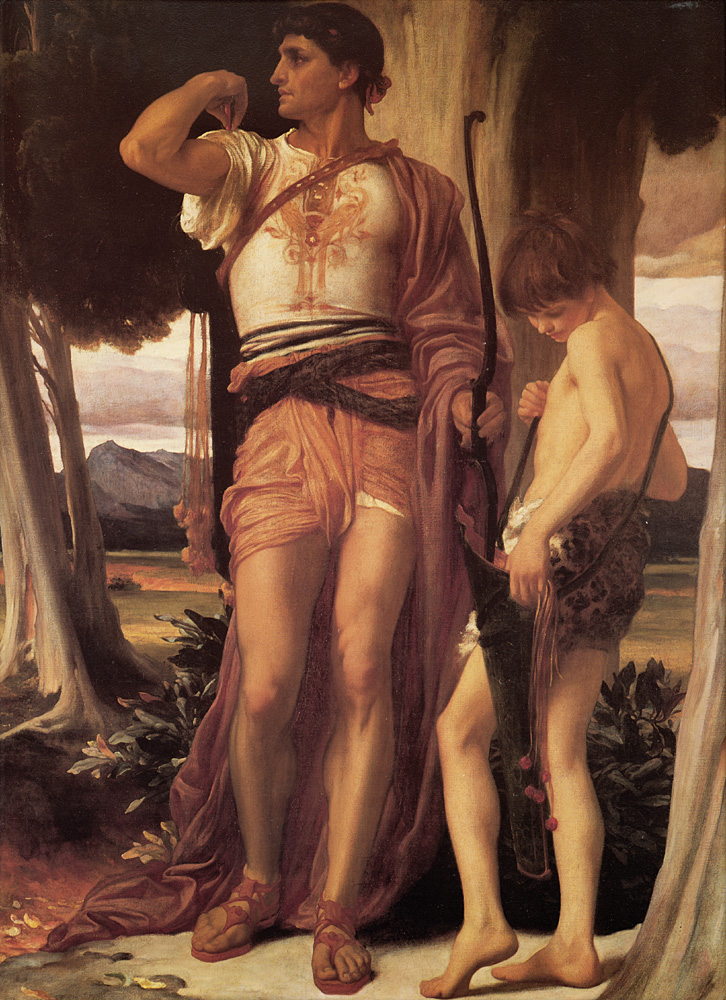
35 It happened in the morning, that Jonathan went out into the field at the time appointed with David, and a little boy with him. 36 He said to his boy, "Run, find now the arrows which I shoot." As the boy ran, he shot an arrow beyond him. 37 When the boy had come to the place of the arrow which Jonathan had shot, Jonathan cried after the boy, and said, "Isn’t the arrow beyond you?" 38 Jonathan cried after the boy, "Go fast! Hurry! Don’t delay!" Jonathan’s boy gathered up the arrows, and came to his master. 40 Jonathan gave his weapons to his boy, and said to him, "Go, carry them to the city." 41 As soon as the boy was gone, David arose out of the south, and fell on his face to the ground, and bowed himself three times. They kissed one another, and wept one with another, and David wept the most. 42 Jonathan said to David, "Go in peace, because we have both sworn in the name of Yahweh, saying, ‘Yahweh shall be between me and you, and between my seed and your seed, forever.’" He arose and departed; and Jonathan went into the city.

Observations: 20:1-8 David is blameless in his dealings, but questions if the persecution by Saul is the result of David's sin. Good idea to check.
20:14-23 To avoid detection Jonathan and David set up a scheme to communicate Saul's favor or disfavor so David can take appropriate action. They reaffirm their covenant of hesed with each other, calling Yahweh as a witness between them. The normal practice was for a new king to kill any rivals for the throne (as they were to each other).
20:24-42 In choosing to be loyal to David, Jonathan, abdicates as heir apparent, in accordance with Samuel's pronouncement (15:26-28). In contrast to his father, Jonathan wanted God's will far more than his own desires. Saul hurls abuse and a spear at his “rebellious wife's son” (projection again). Fortunately his aim was off. Jonathan communicates with David, who goes off and running.

Application: Loyalty to God demands discriminatory allegiance (one or the other); in the process of following Him, we will have to be disloyal to those who don't follow Him, losing the blessings of this world, and frequently incurring abuse, and an occasional spear.

Prayer: God may I always embrace what is right in Your sight, regardless of the cost. Amen.

1 Samuel 21 Deception and Holy Bread
21:1 Then came David to Nob to Ahimelech the priest. Ahimelech came to meet David trembling, and said to him, "Why are you alone, and no man with you?" 2 David said to Ahimelech the priest, "The king has commanded me a business, and has said to me, ‘Let no man know anything of the business about which I send you, and what I have commanded you; and I have appointed the young men to such and such a place.’ 3 Now therefore what is under your hand? Give me five loaves of bread in my hand, or whatever there is present." 4 The priest answered David, and said, "There is no common bread under my hand, but there is holy bread; if only the young men have kept themselves from women." 5 David answered the priest, and said to him, "Truly, women have been kept from us about these three days. When I came out, the vessels of the young men were holy, though it was but a common journey. How much more then today shall their vessels be holy?" 6 So the priest gave him holy bread; for there was no bread there but the show bread, that was taken from before Yahweh, to put hot bread in the day when it was taken away.
7 Now a certain man of the servants of Saul was there that day, detained before Yahweh; and his name was Doeg the Edomite, the best of the herdsmen who belonged to Saul. 8 David said to Ahimelech, "Isn’t there here under your hand spear or sword? For I have neither brought my sword nor my weapons with me, because the king’s business required haste." 9 The priest said, "The sword of Goliath the Philistine, whom you killed in the valley of Elah, behold, it is here wrapped in a cloth behind the ephod. If you will take that, take it; for there is no other except that here." David said, "There is none like that. Give it to me."
10 David arose, and fled that day for fear of Saul, and went to Achish the king of Gath. 11 The servants of Achish said to him, "Isn’t this David the king of the land? Didn’t they sing one to another about him in dances, saying, ‘Saul has slain his thousands, David his ten thousands?’" 12 David laid up these words in his heart, and was very afraid of Achish the king of Gath. 13 He changed his behavior before them, and pretended to be mad in their hands, and scrabbled on the doors of the gate, and let his spittle fall down on his beard. 14 Then Achish said to his servants, "Look, you see the man is mad. Why then have you brought him to me? 15 Do I lack madmen, that you have brought this fellow to play the madman in my presence? Shall this fellow come into my house?"

Observations: 21:1-9 Although David's business was the result of the king's command to kill him, he deceives the priest and receives the holy bread which only priests were to eat. (22:10 states that Ahimelech did inquire of God first). David might have been trying to protect Ahimelech but not letting him know that he would be aiding Saul's enemy. However, it looks like David isn't exhibiting the most God-trusting behavior. Notice that he also gets Goliath's sword, which he first obtained when totally trusting God. Jesus appeals to this account in Matthew 12:1-8 to underscore that God desires a real care for others (mercy) more than ritual. One of Saul's servants was there, and David's actions result in an entire town of innocent priests being destroyed (next chapter).
21:10-15 David flees to Goliath's hometown, Gath, and deceives their king by pretending to be mad. Achish has enough mad men, thank you, and David escapes.

Application: Our actions can have unintended consequences in the lives of others, so we need to be careful to seek and do God's will.

Prayer: God, I trust You to protect me as I do Your will; help me discern it clearly and do it completely. Amen.

1 Samuel 22 Betrayal and Innocent Blood
22:1 David therefore departed there, and escaped to the cave of Adullam. When his brothers and all his father’s house heard it, they went down there to him. 2 Everyone who was in distress, and everyone who was in debt, and everyone who was discontented, gathered themselves to him; and he became captain over them: and there were with him about four hundred men. 3 David went there to Mizpeh of Moab, and he said to the king of Moab, "Please let my father and my mother come out with you, until I know what God will do for me." 4 He brought them before the king of Moab; and they lived with him all the while that David was in the stronghold. 5 The prophet Gad said to David, "Don’t stay in the stronghold. Depart, and go into the land of Judah." Then David departed, and came into the forest of Hereth.
6 Saul heard that David was discovered, and the men who were with him. Now Saul was sitting in Gibeah, under the tamarisk tree in Ramah, with his spear in his hand, and all his servants were standing about him. 7 Saul said to his servants who stood about him, "Hear now, you Benjamites! Will the son of Jesse give everyone of you fields and vineyards, will he make you all captains of thousands and captains of hundreds, 8 that all of you have conspired against me, and there is none who discloses to me when my son makes a treaty with the son of Jesse, and there is none of you who is sorry for me, or discloses to me that my son has stirred up my servant against me, to lie in wait, as at this day?" 9 Then Doeg the Edomite, who stood by the servants of Saul, answered and said, "I saw the son of Jesse coming to Nob, to Ahimelech the son of Ahitub. 10 He inquired of Yahweh for him, gave him food, and gave him the sword of Goliath the Philistine." 11 Then the king sent to call Ahimelech the priest, the son of Ahitub, and all his father’s house, the priests who were in Nob: and they came all of them to the king. 12 Saul said, "Hear now, you son of Ahitub." He answered, "Here I am, my lord." 13 Saul said to him, "Why have you conspired against me, you and the son of Jesse, in that you have given him bread, and a sword, and have inquired of God for him, that he should rise against me, to lie in wait, as at this day?" 14 Then Ahimelech answered the king, and said, "Who among all your servants is so faithful as David, who is the king’s son-in-law, and is taken into your council, and is honorable in your house? 15 Have I today begun to inquire of God for him? Be it far from me! Don’t let the king impute anything to his servant, nor to all the house of my father; for your servant knows nothing of all this, less or more." 16 The king said, "You shall surely die, Ahimelech, you, and all your father’s house." 
17 The king said to the guard who stood about him, "Turn, and kill the priests of Yahweh; because their hand also is with David, and because they knew that he fled, and didn’t disclose it to me." But the servants of the king wouldn’t put forth their hand to fall on the priests of Yahweh. 18 The king said to Doeg, "Turn and attack the priests!" Doeg the Edomite turned, and he attacked the priests, and he killed on that day eighty-five people who wore a linen ephod. 19 He struck Nob, the city of the priests, with the edge of the sword, both men and women, children and nursing babies, and cattle and donkeys and sheep, with the edge of the sword.
20 One of the sons of Ahimelech, the son of Ahitub, named Abiathar, escaped, and fled after David. 21 Abiathar told David that Saul had slain Yahweh’s priests. 22 David said to Abiathar, "I knew on that day, when Doeg the Edomite was there, that he would surely tell Saul. I am responsible for the death of all the persons of your father’s house. 23 Stay with me, don’t be afraid; for he who seeks my life seeks your life. For with me you shall be in safeguard."

Observations: 22:1-5 David attracts a ragtag band of 400 “losers,” and moves his parents to Moab for safety. A prophet, Gad, gives him a warning which David follows.
22:6-23 Saul complains that no one tells him anything, and Doeg spills the beans about David and Ahimelech, who protests (correctly) his innocence. Saul orders his death, but just like in the rash order to kill Jonathan, the Israelites refuse to kill Yahweh's priests. Doeg the Edomite slaughters 85 priests, for doing what is right, along with the entire city of Nob. David mourns his responsibility for the slaughter, which was indirectly caused by his actions. In Psalm 52 (Dt 21 Post) David calls for judgment upon Doeg for his evil.

Application: It is better to do what's right in God's sight, and suffer the temporal consequences (even death), than do what is wrong and suffer eternal consequences.

Prayer: Lord, You are the Creator and Sustainer of life, which is to be invested and sacrificed for Your purposes. Amen.


Digging Deeper:

God in a nutshell: God uses multiple means to bring about His purposes, both individually and globally. His desire is for people to trust Him, do what He's revealed, and then to bless them so He is glorified. He will sometimes bring about difficulties to deepen our dependence upon Him and refine our trust in His goodness and wisdom. He provides resources and protection for His servants from the trials He allows or even brings into their lives. He expects us to do what's right especially when treated unjustly (ever heard of Jesus?).

Us in a nutshell: We are always faced with choices to do what pleases and benefits God or ourselves. If we choose to sacrifice our interests for the sake of God's will, we win. We lose when we place the priority on our pitiful quest for worth and value apart from God. Sometime we will unjustly lose our rights or lives in order to do what God has revealed is right. That's why we're on earth.

Where to Go for More:
1 Samuel 19-22 complete text
1 Samuel 19
19:1 Saul spoke to Jonathan his son, and to all his servants, that they should kill David. But Jonathan, Saul’s son, delighted much in David. 2 Jonathan told David, saying, "Saul my father seeks to kill you. Now therefore, please take care of yourself in the morning, and live in a secret place, and hide yourself. 3 I will go out and stand beside my father in the field where you are, and I will talk with my father about you; and if I see anything, I will tell you." 4 Jonathan spoke good of David to Saul his father, and said to him, "Don’t let the king sin against his servant, against David; because he has not sinned against you, and because his works have been very good toward you; 5 for he put his life in his hand, and struck the Philistine, and Yahweh worked a great victory for all Israel. You saw it, and rejoiced. Why then will you sin against innocent blood, to kill David without a cause?" 6 Saul listened to the voice of Jonathan: and Saul swore, "As Yahweh lives, he shall not be put to death." 7 Jonathan called David, and Jonathan showed him all those things. Jonathan brought David to Saul, and he was in his presence, as before.
8 There was war again. David went out, and fought with the Philistines, and killed them with a great slaughter; and they fled before him. 9 An evil spirit from Yahweh was on Saul, as he sat in his house with his spear in his hand; and David was playing with his hand. 10 Saul sought to pin David even to the wall with the spear; but he slipped away out of Saul’s presence, and he stuck the spear into the wall. David fled, and escaped that night.
11 Saul sent messengers to David’s house, to watch him, and to kill him in the morning. Michal, David’s wife, told him, saying, "If you don’t save your life tonight, tomorrow you will be killed." 12 So Michal let David down through the window. He went, fled, and escaped. 13 Michal took the teraphim, and laid it in the bed, and put a pillow of goats’ hair at its head, and covered it with the clothes. 14 When Saul sent messengers to take David, she said, "He is sick." 15 Saul sent the messengers to see David, saying, "Bring him up to me in the bed, that I may kill him." 16 When the messengers came in, behold, the teraphim was in the bed, with the pillow of goats’ hair at its head. 17 Saul said to Michal, "Why have you deceived me thus, and let my enemy go, so that he is escaped?" Michal answered Saul, "He said to me, ‘Let me go! Why should I kill you?’"
18 Now David fled, and escaped, and came to Samuel to Ramah, and told him all that Saul had done to him. He and Samuel went and lived in Naioth. 19 It was told Saul, saying, "Behold, David is at Naioth in Ramah." 20 Saul sent messengers to take David: and when they saw the company of the prophets prophesying, and Samuel standing as head over them, the Spirit of God came on the messengers of Saul, and they also prophesied. 21 When it was told Saul, he sent other messengers, and they also prophesied. Saul sent messengers again the third time, and they also prophesied. 22 Then went he also to Ramah, and came to the great well that is in Secu: and he asked, "Where are Samuel and David?" One said, "Behold, they are at Naioth in Ramah." 23 He went there to Naioth in Ramah. Then the Spirit of God came on him also, and he went on, and prophesied, until he came to Naioth in Ramah. 24 He also stripped off his clothes, and he also prophesied before Samuel, and lay down naked all that day and all that night. Therefore they say, "Is Saul also among the prophets?"

1 Samuel 21
21:1 Then came David to Nob to Ahimelech the priest. Ahimelech came to meet David trembling, and said to him, "Why are you alone, and no man with you?" 2 David said to Ahimelech the priest, "The king has commanded me a business, and has said to me, ‘Let no man know anything of the business about which I send you, and what I have commanded you; and I have appointed the young men to such and such a place.’ 3 Now therefore what is under your hand? Give me five loaves of bread in my hand, or whatever there is present." 4 The priest answered David, and said, "There is no common bread under my hand, but there is holy bread; if only the young men have kept themselves from women." 5 David answered the priest, and said to him, "Truly, women have been kept from us about these three days. When I came out, the vessels of the young men were holy, though it was but a common journey. How much more then today shall their vessels be holy?" 6 So the priest gave him holy bread; for there was no bread there but the show bread, that was taken from before Yahweh, to put hot bread in the day when it was taken away. 7 Now a certain man of the servants of Saul was there that day, detained before Yahweh; and his name was Doeg the Edomite, the best of the herdsmen who belonged to Saul. 8 David said to Ahimelech, "Isn’t there here under your hand spear or sword? For I have neither brought my sword nor my weapons with me, because the king’s business required haste." 9 The priest said, "The sword of Goliath the Philistine, whom you killed in the valley of Elah, behold, it is here wrapped in a cloth behind the ephod. If you will take that, take it; for there is no other except that here." David said, "There is none like that. Give it to me."
10 David arose, and fled that day for fear of Saul, and went to Achish the king of Gath. 11 The servants of Achish said to him, "Isn’t this David the king of the land? Didn’t they sing one to another about him in dances, saying, ‘Saul has slain his thousands, David his ten thousands?’" 12 David laid up these words in his heart, and was very afraid of Achish the king of Gath. 13 He changed his behaviour before them, and pretended to be mad in their hands, and scrabbled on the doors of the gate, and let his spittle fall down on his beard. 14 Then Achish said to his servants, "Look, you see the man is mad. Why then have you brought him to me? 15 Do I lack madmen, that you have brought this fellow to play the madman in my presence? Shall this fellow come into my house?"

1 Samuel 22
22:1 David therefore departed there, and escaped to the cave of Adullam. When his brothers and all his father’s house heard it, they went down there to him. 2 Everyone who was in distress, and everyone who was in debt, and everyone who was discontented, gathered themselves to him; and he became captain over them: and there were with him about four hundred men. 3 David went there to Mizpeh of Moab, and he said to the king of Moab, "Please let my father and my mother come out with you, until I know what God will do for me." 4 He brought them before the king of Moab; and they lived with him all the while that David was in the stronghold. 5 The prophet Gad said to David, "Don’t stay in the stronghold. Depart, and go into the land of Judah." Then David departed, and came into the forest of Hereth.
6 Saul heard that David was discovered, and the men who were with him. Now Saul was sitting in Gibeah, under the tamarisk tree in Ramah, with his spear in his hand, and all his servants were standing about him. 7 Saul said to his servants who stood about him, "Hear now, you Benjamites! Will the son of Jesse give everyone of you fields and vineyards, will he make you all captains of thousands and captains of hundreds, 8 that all of you have conspired against me, and there is none who discloses to me when my son makes a treaty with the son of Jesse, and there is none of you who is sorry for me, or discloses to me that my son has stirred up my servant against me, to lie in wait, as at this day?" 9 Then Doeg the Edomite, who stood by the servants of Saul, answered and said, "I saw the son of Jesse coming to Nob, to Ahimelech the son of Ahitub. 10 He inquired of Yahweh for him, gave him food, and gave him the sword of Goliath the Philistine." 11 Then the king sent to call Ahimelech the priest, the son of Ahitub, and all his father’s house, the priests who were in Nob: and they came all of them to the king. 12 Saul said, "Hear now, you son of Ahitub." He answered, "Here I am, my lord." 13 Saul said to him, "Why have you conspired against me, you and the son of Jesse, in that you have given him bread, and a sword, and have inquired of God for him, that he should rise against me, to lie in wait, as at this day?" 14 Then Ahimelech answered the king, and said, "Who among all your servants is so faithful as David, who is the king’s son-in-law, and is taken into your council, and is honourable in your house? 15 Have I today begun to inquire of God for him? Be it far from me! Don’t let the king impute anything to his servant, nor to all the house of my father; for your servant knows nothing of all this, less or more." 16 The king said, "You shall surely die, Ahimelech, you, and all your father’s house." 17 The king said to the guard who stood about him, "Turn, and kill the priests of Yahweh; because their hand also is with David, and because they knew that he fled, and didn’t disclose it to me." But the servants of the king wouldn’t put forth their hand to fall on the priests of Yahweh. 18 The king said to Doeg, "Turn and attack the priests!" Doeg the Edomite turned, and he attacked the priests, and he killed on that day eighty-five people who wore a linen ephod. 19 He struck Nob, the city of the priests, with the edge of the sword, both men and women, children and nursing babies, and cattle and donkeys and sheep, with the edge of the sword.
20 One of the sons of Ahimelech, the son of Ahitub, named Abiathar, escaped, and fled after David. 21 Abiathar told David that Saul had slain Yahweh’s priests. 22 David said to Abiathar, "I knew on that day, when Doeg the Edomite was there, that he would surely tell Saul. I am responsible for the death of all the persons of your father’s house. 23 Stay with me, don’t be afraid; for he who seeks my life seeks your life. For with me you shall be in safeguard."